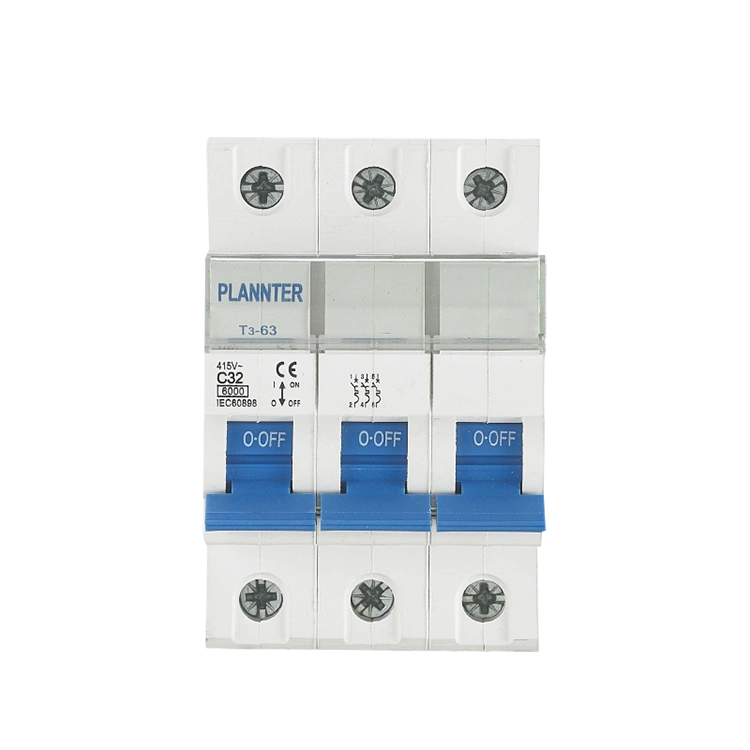
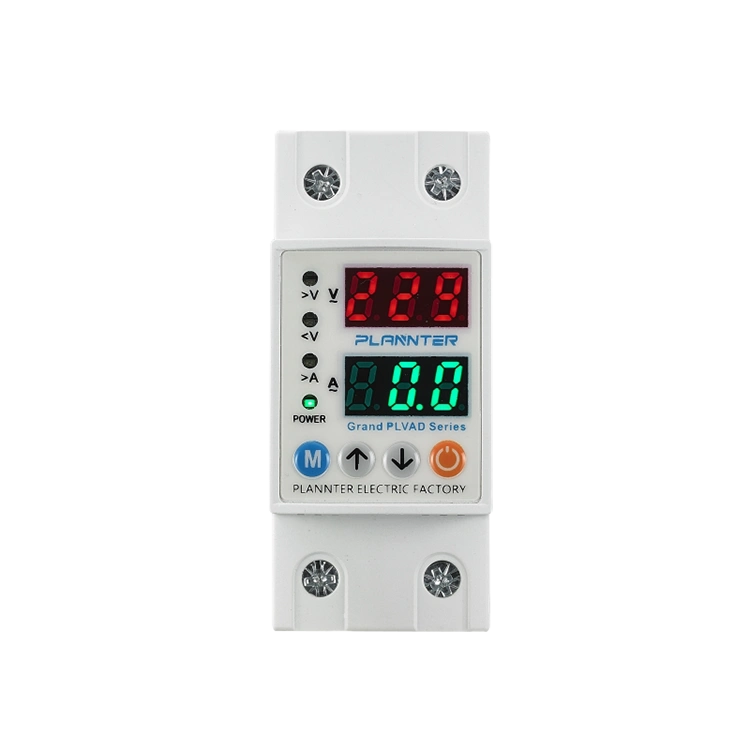
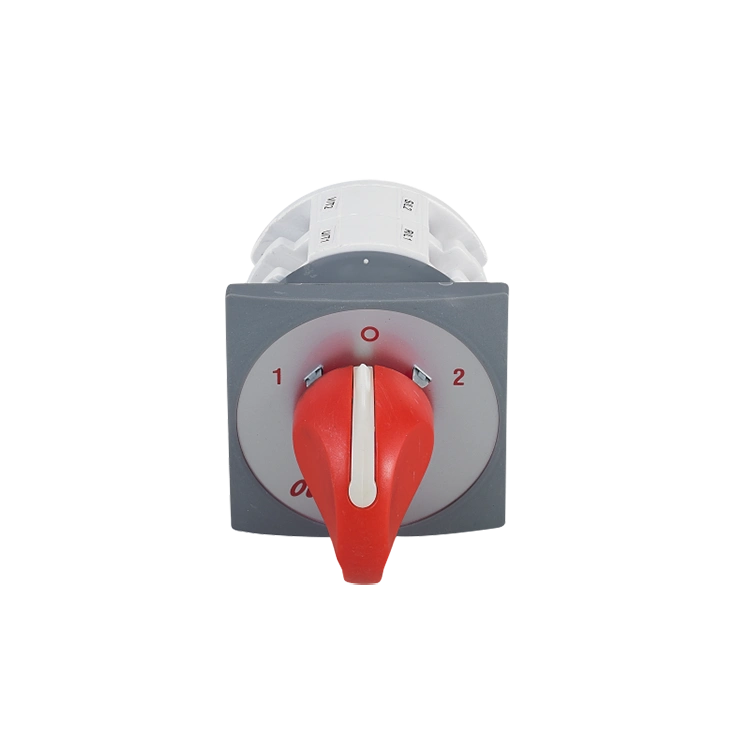
As a professional manufacturer of Mini Circuit Breakers (MCBs), Pugao(Plannter) provides high-efficiency electrical safety and reliability products to our customers. MCBs are key components in modern electrical equipment, providing robust overload and short-circuit protection. They automatically shut off the current in the event of a fault. Unlike traditional fuses, they are resettable, offering longer lifespans and lower costs.
How Does a Miniature Circuit Breaker Work?
An MCB is an electromechanical device that protects circuits from overcurrent conditions. It detects fault conditions and immediately cuts off the current by interrupting the on/off switch. Specifically, its function is to protect against overloads and short circuits. So how does this process work?
When the current flowing through an MCB exceeds its rated value for a long time, the bimetallic strip inside heats up and bends. This action triggers the circuit breaker's tripping mechanism, and the current is cut off. Through this process, overload protection is achieved.
When a huge current surge occurs suddenly, that is, a short circuit occurs, the electromagnetic coil inside the MCB will generate a strong magnetic field, instantly forcing the contacts to separate, cutting off the circuit within a few milliseconds. This is short-circuit protection.
After the fault is cleared, it can be manually reset by turning the operating lever back to the "ON" position, and power can be restored without replacing parts.
What is the Difference Between Mini Circuit Breaker Type B, C, and D?
A Mini Circuit Breaker is classified into Type B, C, and D based on its tripping characteristics, especially how it responds to inrush currents. Choosing the correct type ensures proper protection without unnecessary tripping.
Type B:
-
Trips at 3 to 5 times the rated current (In).
-
Suitable for low inrush current applications.
-
Commonly used in residential circuits such as lighting and small appliances.
-
Provides fast protection for sensitive loads.
Type C:
-
Trips at 5 to 10 times the rated current (In).
-
Designed for moderate inrush current loads.
-
Widely used in commercial and light industrial applications.
-
Ideal for equipment like air conditioners, pumps, and small motors.
Type D:
-
Trips at 10 to 20 times the rated current (In).
-
Handles high inrush currents without nuisance tripping.
-
Used in heavy industrial applications.
-
Suitable for transformers, large motors, and welding equipment.
Difference Between MCB and RCD / RCCB
A Mini Circuit Breaker and an RCD/RCCB are both essential protection devices in electrical systems, but they serve different purposes. Understanding their differences helps ensure complete circuit protection.
Mini Circuit Breaker (MCB):
-
Protects against overload and short circuit conditions.
-
Automatically trips when current exceeds the rated limit.
-
Used in residential, commercial, and industrial distribution systems.
-
Does NOT detect leakage current or electric shock risks.
RCD / RCCB (Residual Current Device / Residual Current Circuit Breaker):
-
Protects against earth leakage and electric shock.
-
Detects imbalance between live and neutral currents.
-
Trips when leakage current exceeds a safe threshold (e.g., 30mA).
-
Does NOT provide overload or short circuit protection.
Key Differences:
-
Protection Type: MCB protects equipment; RCD/RCCB protects people.
-
Function: MCB handles overcurrent; RCD/RCCB detects leakage current.
-
Usage: Often used together for complete protection.
-
Safety Level: Combining both devices ensures both electrical and personal safety.
Why Choose Pugao's(Plannter) Miniature Circuit Breakers?
Our MCB products can provide overload and short circuit protection, high safety, and can reduce the risk of fire. Moreover, when protection is needed, it responds quickly and can trip almost instantly, reducing damage to the lines and connected equipment. It can also be easily reset afterwards. The circuit condition can be identified by the status indicated on the switch, making it very convenient to use.
Our miniature circuit breakers are compact in size and can be installed at high density in user units and distribution boxes, making space utilization very efficient. They can also be coordinated so that only the circuit breaker closest to the fault trips without affecting other equipment.