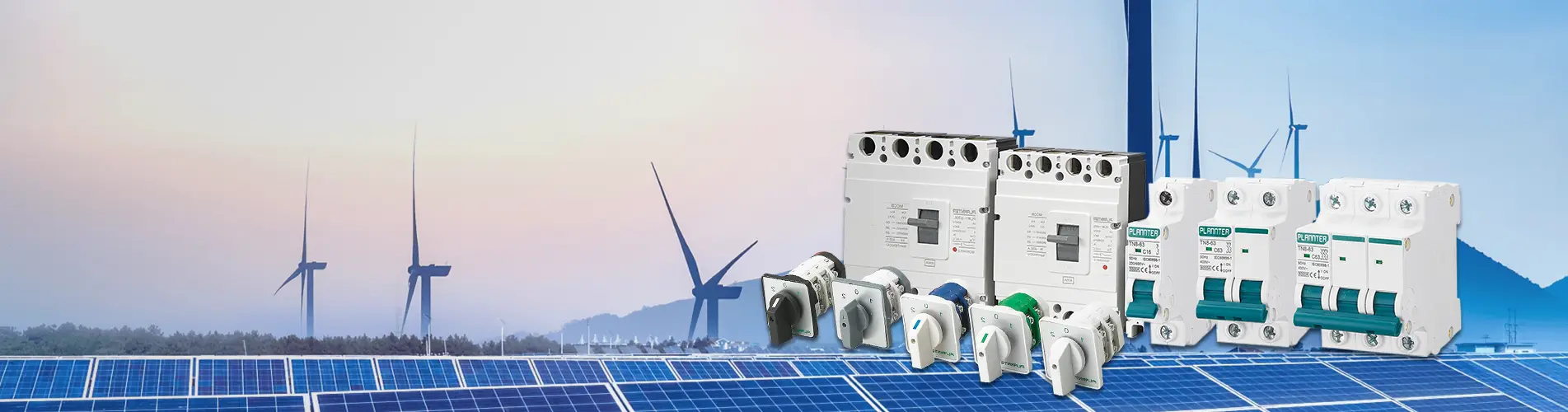
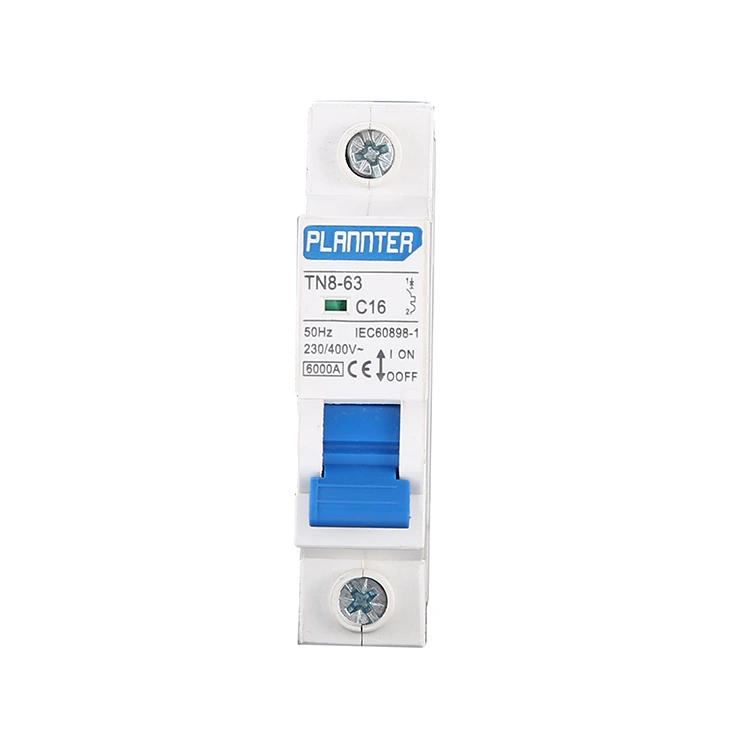
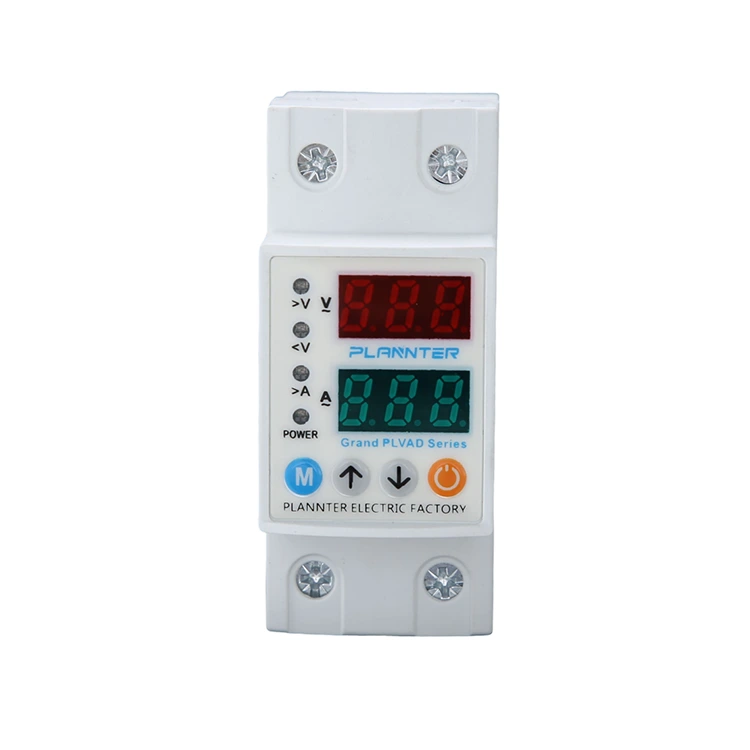
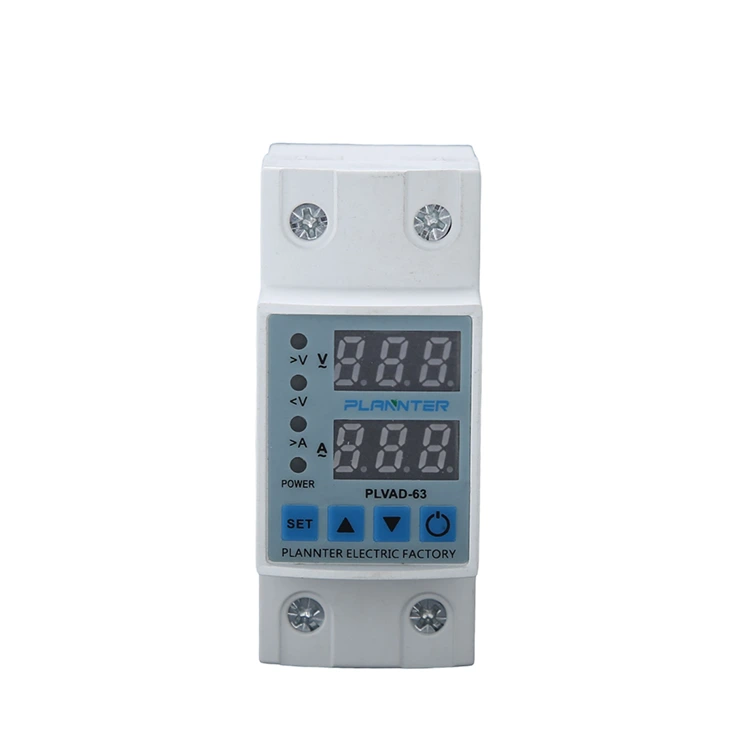
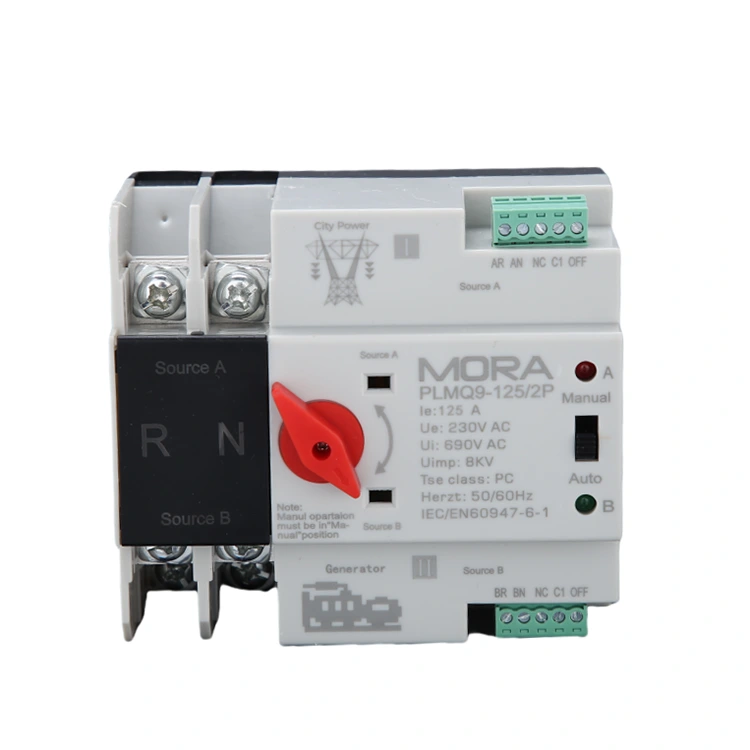
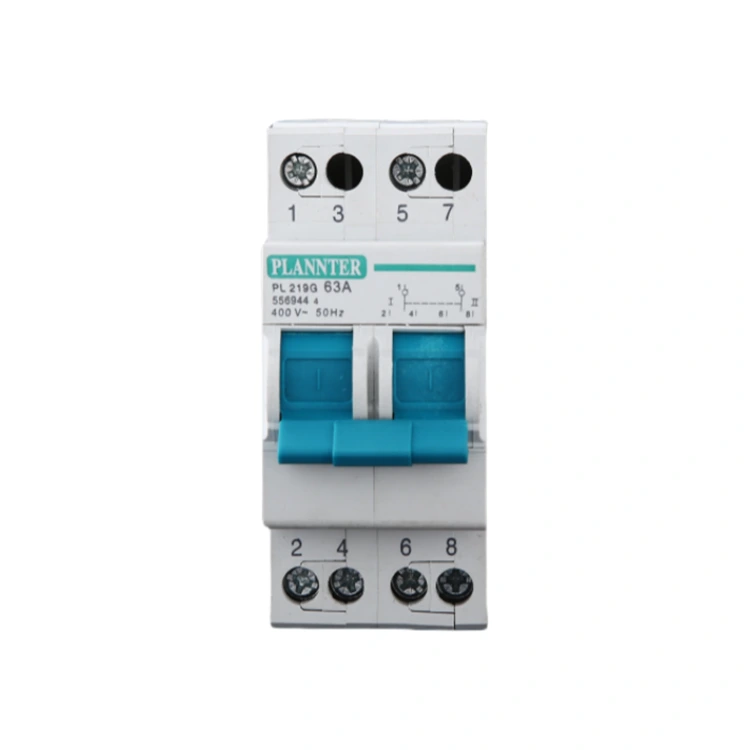
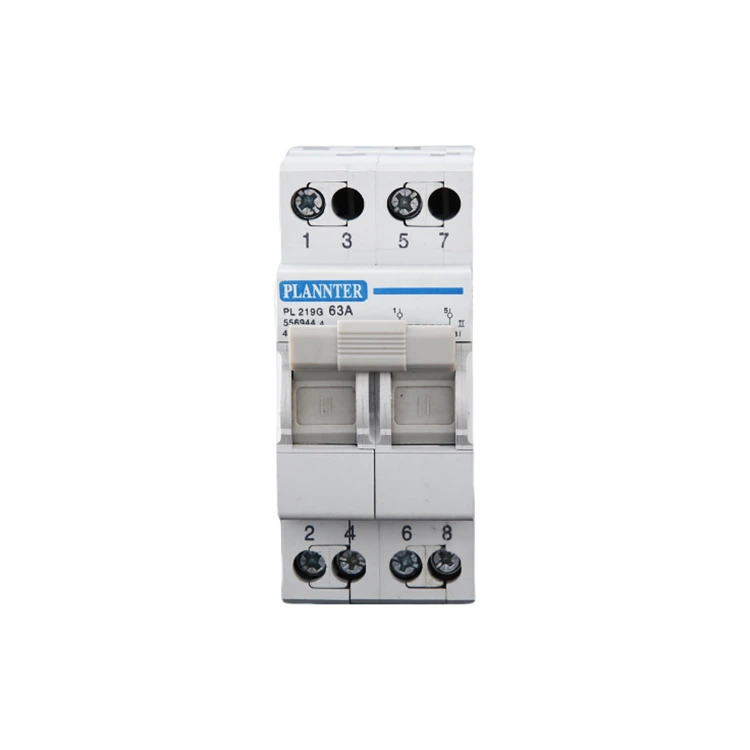
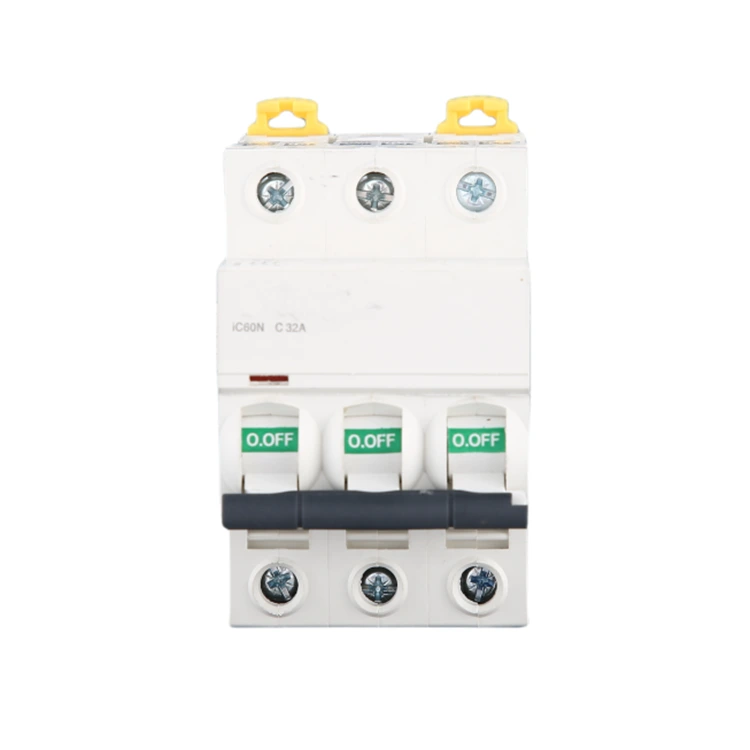
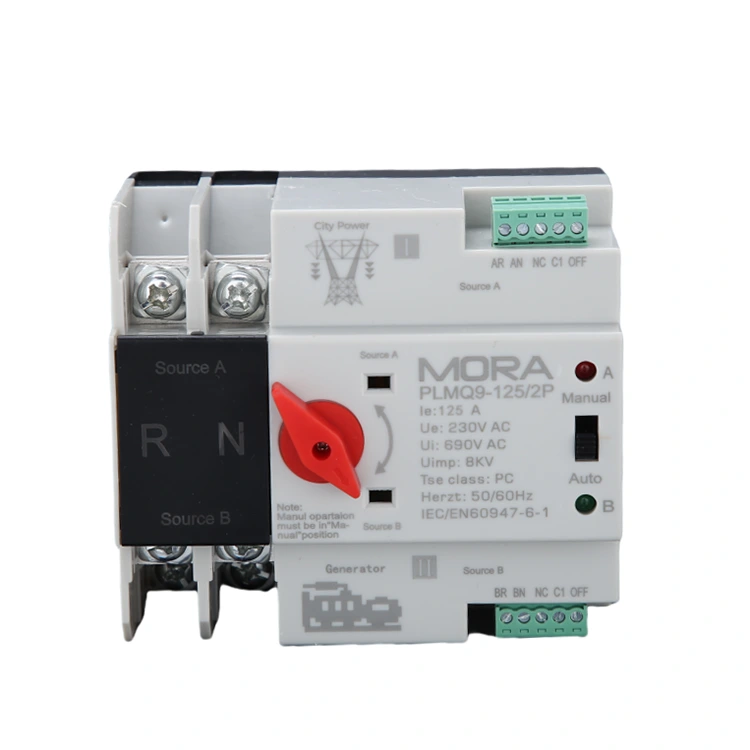
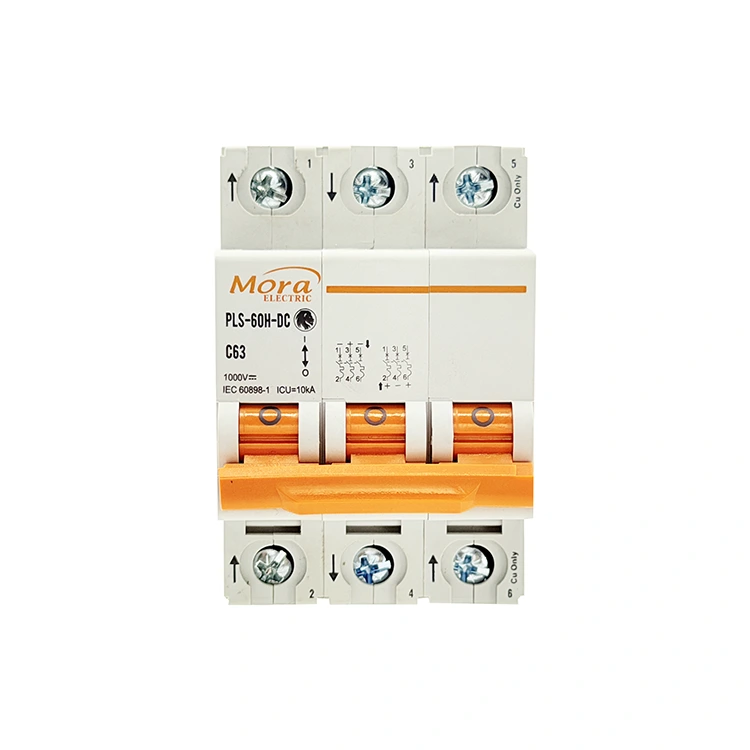
The name suggests a manual changeover switch. Unlike automatic switches, it operates via a mechanical lever and also connects the load to the primary or backup power source. Plannter offers both automatic and manual changeover switches. The manual version is more affordable and can be chosen for applications that don't require immediate response.
How Does a Manual Changeover Switch Work?
A Manual Changeover Switch is a type of low-voltage switching device. Its internal structure typically consists of an assembly of multiple contacts; by rotating a handle, a central shaft is actuated, thereby engaging or disengaging the moving contacts with the stationary contacts.
Operation Method: Purely physical and manual. It involves no motors, controllers, or automatic detection circuits.
Core Logic: It employs a Single-Pole Double-Throw (SPDT) or Double-Pole Double-Throw (DPDT) configuration, designed to ensure that—during the switching process—the two power sources are never simultaneously connected, thereby preventing short circuits.
Why Are Manual Transfer Switches Still Necessary in the Age of Automation?
1. Exceptional Reliability
Because they contain no electronic components, manual transfer switches are immune to failure caused by control board burnout or induced voltage interference. They are capable of operating reliably even in extremely harsh environments.
2. Cost-Effectiveness
Compared to automatic transfer switches, the products in this series typically cost only one-third to one-half as much as their automatic counterparts. For projects with limited budgets—or those where power outages occur very infrequently—they offer outstanding value for money.
3. Safety
Thanks to their physical mechanical interlocking mechanism, manual switches provide a 100% guarantee that the main power supply and the backup power supply will never be connected simultaneously.
4. Prevention of Frequent, Unnecessary Switching
In situations where the power grid is highly unstable—such as when momentary outages lasting only a fraction of a second occur frequently—an Automatic Transfer Switch (ATS) might cycle back and forth erratically.
With a manual switch, however, the decision rests with a human operator: one can simply wait until the power grid has fully stabilized before switching the load back to the main supply.
Key Features
The manual changeover switch's housing is made of highly flame-retardant PA66 plastic, this material can offer long-lasting durability as well as higher safety. It uses a simple lever for fast switching, with clear indicators to identify the current position. All these designing points can let you operate conveniently.
The compact design allows it to be installed in various distribution panels and cabinets, so there's no need to prepare a big space for it. It is highly adaptable to operating environments, operating normally in temperatures ranging from -5°C to +40°C.
Usage Precautions
When installing a manual changeover switch, consult a qualified electrician. Be sure to confirm your local electrical codes and safety standards. Any installation errors could result in a short circuit or even electric shock. Once the installation is complete and normal operation is possible, PUGAO (Plannter Electric) does not recommend switching under load. This may cause arcing, contact damage, and other safety hazards, so please turn off the load before operating the switch.
During subsequent use, regularly visually inspect the switch for damage, test the switch mechanism, and clean the contacts to ensure they remain secure.
In Which Scenarios Do We Recommend Using a Manual Changeover Switch?
1. Home Emergency Generator Connection
This is the primary application scenario for manual changeover switches, particularly well-suited for households where power outages occur infrequently.
Application Method: Installed at the main service entrance (master breaker) of the home; one terminal connects to the utility grid, while the other connects to an outdoor portable generator.
Why Choose Manual?
Safety: Manually toggling the switch to the central "off" (neutral) position provides a tangible physical disconnection. This prevents the generator from back-feeding power into the utility grid, thereby protecting utility workers who may be performing repairs on power lines.
Verification Process: Following a power outage, users typically need to start the generator and allow it to stabilize before manually switching over. This deliberate, manual process ensures greater voltage stability compared to automatic switching systems.
2. Agricultural and Remote-Area Pumping Stations
On farms, in orchards, or at irrigation pumping stations, the quality of the utility grid is often inconsistent, and the operating environment can be harsh.
Application Method: Used to switch between utility grid power and a diesel generator.
Why Choose Manual?
Interference Immunity: Rural power grids frequently experience severe power surges or lightning-induced transients. The electronic control boards found in automatic switches are susceptible to burnout under such conditions, whereas purely mechanical manual switches are virtually immune to all forms of electronic interference.
Ease of Maintenance: In the event of a malfunction, the issue can be diagnosed visually. Simple mechanical inspection allows for immediate verification of the switch's status, eliminating the need for complex after-sales technical support or repairs.
3. Isolation for Industrial Equipment Maintenance
In factory workshops and industrial facilities, our manual changeover switches frequently serve as critical maintenance isolation switches.
Application Method: Positioned at the main power input line of large-scale machinery or equipment.
Why Choose Manual?
Central Disconnect Position (I-0-II): Maintenance personnel can toggle the switch to the central "0" (off) position and secure it with a padlock. This ensures that during maintenance operations, neither power source can be accidentally reconnected, thereby guaranteeing the safety of personnel.
Multi-Source Switching: Used to manually switch between a Variable Frequency Drive (VFD) source and a direct utility-frequency source. If the VFD fails, the switch allows for a manual return to the standard utility-frequency mode, ensuring uninterrupted production.
4. Dual-Source Power Changeover for Commercial Complexes
In smaller clinics, laboratories, or convenience stores, facilities often utilize dual power feeds supplied by two separate utility transformers.
Application Method: Serves as the changeover device for switching between these two independent utility power sources.
Why Choose Manual?
Cost Control: A manual switch offers an extremely cost-effective solution for dual-power switching requirements.
Decision-Making Flexibility: When the main power grid experiences frequent voltage fluctuations, an automatic switch will constantly toggle back and forth, potentially damaging connected equipment; manual control allows the user to decide precisely when to switch to the backup circuit, thereby avoiding periods of unstable voltage.