News

Are You Still Choosing a Molded Case Circuit Breaker Based Solely on Amps—While Ignoring Everything Else That Matters?

2026-08-27 0 Leave me a message

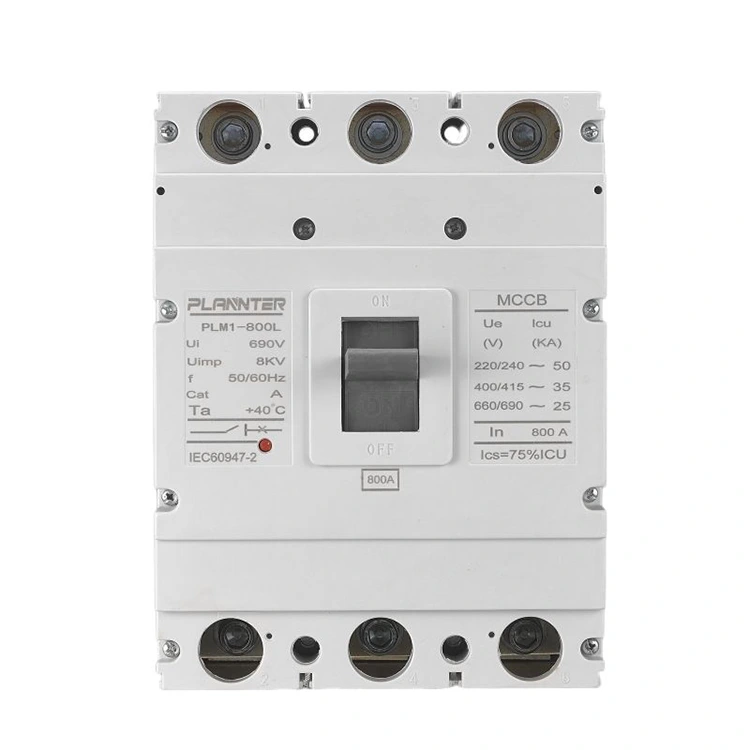
Selecting a circuit breaker often starts with one simple number: rated current. However, modern electrical systems require more than matching amps. A Molded Case Circuit Breaker must also be evaluated based on breaking capacity, protection characteristics, installation environment, mechanical reliability, and long-term operating requirements.

Choosing only by current rating may create hidden risks. Two breakers with the same amp value can perform very differently when facing short circuits, frequent switching, temperature changes, or complex power distribution conditions.

Molded Case Circuit Bre

Why Amps Alone Are Not Enough

The rated current of a breaker indicates how much continuous current it can carry under normal conditions. It is an important specification, but it is only one part of the selection process.

Electrical systems today are becoming more diverse. Industrial equipment, commercial buildings, renewable energy projects, and automated production lines all create different protection requirements.

A breaker selected only by amperage may fail to consider:

Selection Factor Why It Matters
Rated current Determines the normal operating load range
Breaking capacity Defines the ability to interrupt fault current safely
Trip characteristics Controls how quickly protection responds
Operating environment Affects reliability under heat, dust, or vibration
Mechanical life Influences long-term switching performance

A correct selection approach considers the complete electrical environment rather than a single specification.

Breaking Capacity: The Specification Many Projects Overlook

One of the most important differences between circuit breakers is their ability to interrupt fault currents.

When a short circuit occurs, the current can rise far above normal operating levels. The breaker must disconnect the circuit quickly before damage occurs to cables, equipment, or distribution systems.

This is where breaking capacity becomes critical.

For example, a breaker rated for 250A current does not automatically mean it can safely interrupt every 250A fault condition. The short-circuit level of the installation determines what protection capability is required.

Engineers and electrical professionals usually review:

  • Expected short-circuit current
  • Transformer capacity
  • Distribution network design
  • Equipment protection requirements
  • Ignoring these factors may result in insufficient protection even when the current rating appears correct.

    Different Applications Require Different Protection Strategies

    Electrical equipment operates under different conditions. A factory motor control system, a commercial building distribution panel, and a renewable energy installation may all need different breaker characteristics.

    Industrial Applications

    Industrial environments often involve motors, welding equipment, automation systems, and heavy machinery. These applications can create high starting currents and frequent electrical changes.

    A suitable Molded Case Circuit Breaker should provide stable protection while avoiding unnecessary interruptions during normal operation.

    Commercial Buildings

    Office buildings, shopping centers, and public facilities usually require reliable power distribution with easy maintenance access.

    In these environments, protection coordination is important. Multiple breakers must work together so that only the affected circuit is disconnected during a fault.

    Renewable Energy Systems

    Solar and energy storage applications are introducing new challenges for electrical protection. Power flow patterns are becoming more complex, requiring careful evaluation of breaker performance and system compatibility.

    The Importance of Trip Characteristics

    A breaker does more than disconnect power. Its trip mechanism determines how it responds to abnormal conditions.

    Common protection functions include:

  • Overload protection
  • Short-circuit protection
  • Adjustable trip settings
  • Coordination with upstream and downstream devices
  • Different equipment has different tolerance levels. A motor may require different protection behavior compared with lighting circuits or sensitive electronic equipment.

    Selecting the wrong trip characteristics can lead to two problems:

    1. The breaker trips too frequently, affecting system operation.
    2. The breaker responds too slowly, increasing equipment risk.

    A balanced protection design improves both safety and operational stability.

    Manufacturing Quality Directly Influences Product Performance

    Electrical protection equipment depends heavily on manufacturing precision. Internal components must work together accurately because even small mechanical or electrical variations can affect performance.

    Zhejiang Pugao Electric Power Co., Ltd. (Plannter Electric) has focused on low-voltage electrical equipment production since 2011, developing products including power distribution switches, control equipment, motors, and instrumentation.

    The company operates production facilities equipped with automated processing and inspection systems, including automatic punching machines, product inspection and validation workbenches, laser marking equipment, automated packaging lines, and multiple assembly production lines.

    These manufacturing capabilities support consistent production control and help ensure that electrical products meet practical application requirements.

    What Should Be Checked Before Choosing a Circuit Breaker?

    Before selecting a breaker for a project, several questions should be considered:

    Question Purpose
    What is the normal operating current? Determines suitable current rating
    What is the possible fault current? Determines required breaking capacity
    How often will switching occur? Evaluates mechanical durability needs
    Where will the breaker be installed? Considers environmental conditions
    How will protection devices coordinate? Ensures system reliability

    This approach helps avoid choosing equipment based on incomplete information.

    Compact Design and Reliable Protection Are Becoming More Important

    Modern electrical panels are under increasing pressure to provide more functions in less space. Compact designs, efficient installation, and simplified maintenance are becoming important considerations.

    However, smaller size does not mean lower requirements. Protection equipment must still maintain accurate operation, stable mechanical performance, and reliable electrical characteristics.

    As power distribution systems become smarter and more complex, the role of circuit protection continues to expand. The future of electrical safety depends not only on higher capacity but also on better matching between equipment and application conditions.

    Conclusion

    Current rating remains an essential specification when selecting electrical protection equipment, but it should never be the only deciding factor. Breaking capacity, trip performance, installation conditions, and manufacturing quality all influence whether a breaker can provide reliable protection.

    A Molded Case Circuit Breaker should be selected according to the complete system environment rather than a single amp number. Zhejiang Pugao Electric Power Co., Ltd. (Plannter Electric) continues to develop low-voltage electrical equipment with attention to production consistency, testing processes, and practical application needs, supporting safer and more reliable power distribution solutions.

    Related News
    Leave me a message
    X
    We use cookies to offer you a better browsing experience, analyze site traffic and personalize content. By using this site, you agree to our use of cookies.Privacy Policy
    RejectAccept