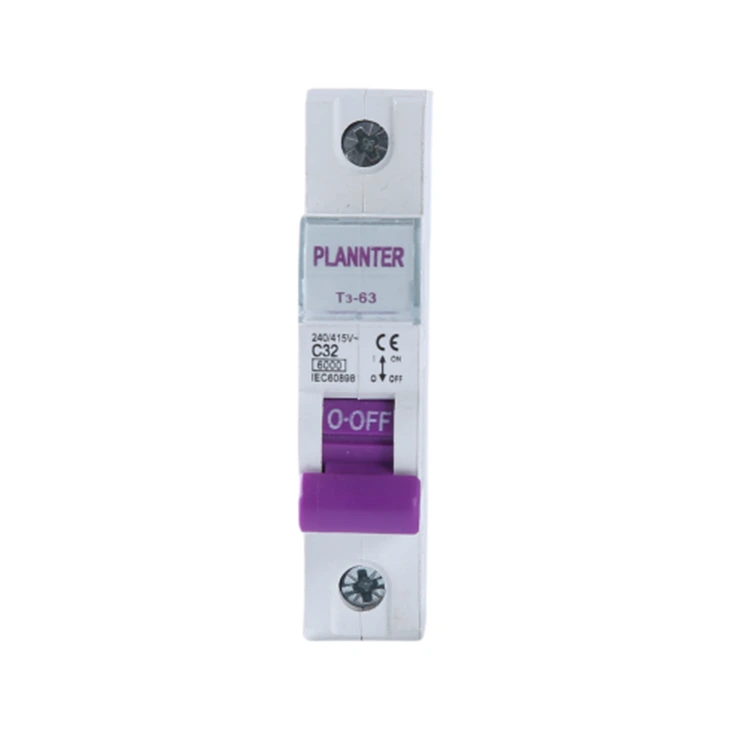
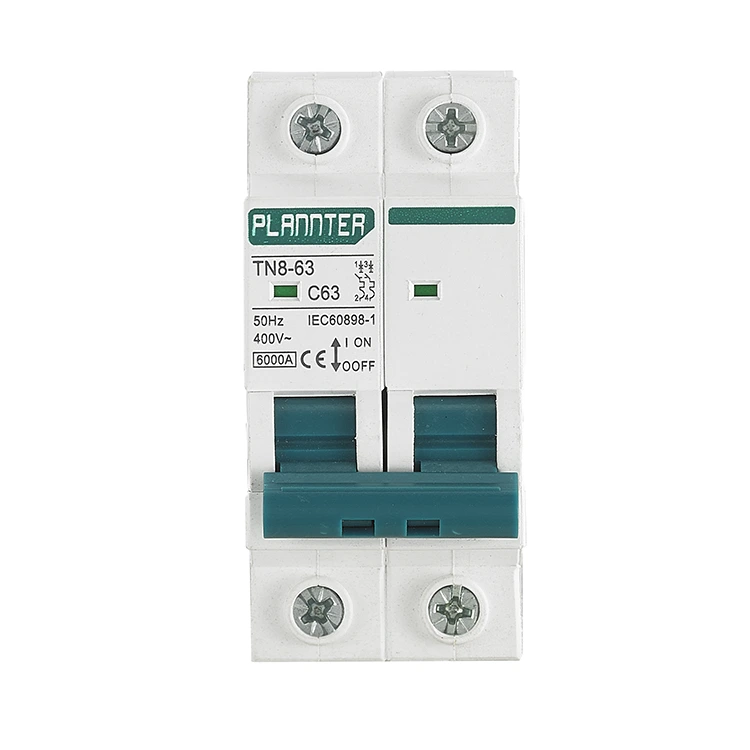
This article explores the benefits, applications, and key parameters of a Manual Changeover Switch (MCS). We will answer how, why, and what questions to provide a deep, professional insight into the product, introduce the manufacturer Yueqing Planter Electric Factory, and present a detailed specification sheet. We will also include an FAQ section covering common questions about manual changeover switches. The goal is to help you understand the product in full detail and decide how it can fit your system.
Introduction to Yueqing Planter Electric Factory
What is a Manual Changeover Switch?
How and Why to Use a Manual Changeover Switch
Technical Specifications & Parameters
FAQ: 10 Common Questions & Answers
Summary & Contact Information
Yueqing Planter Electric Factory is a well-established manufacturer specializing in low-voltage electrical distribution equipment and switching devices. Located in Yueqing, Zhejiang Province in China, the factory focuses on design, production, and testing of switching devices, including manual changeover switches, transfer switches, and associated accessories. With decades of production experience and strict quality control, the company offers tailored solutions for industrial, commercial, and residential applications. Their product line is designed to meet global standards and provide reliable performance across various conditions.
Established in 2011, Yueqing Plannter Electric Factory has specialized in the production of low-voltage electrical equipment for 14 years, primarily exporting power distribution switches, control equipment, motors, instrumentation, and other products. The company maintains a comprehensive and scientific quality management system. Plant Electric Factory's integrity, strength, and product quality are recognized throughout the industry.
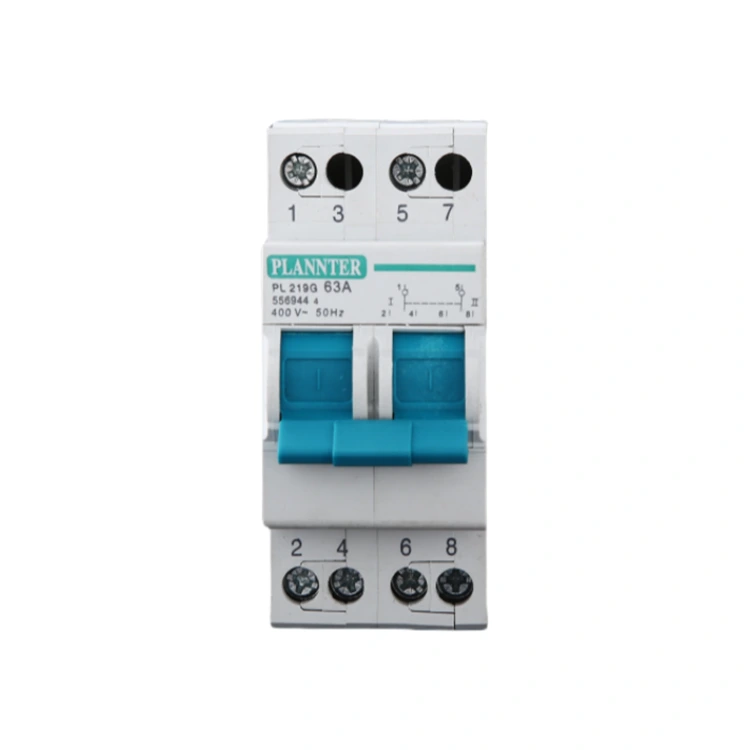
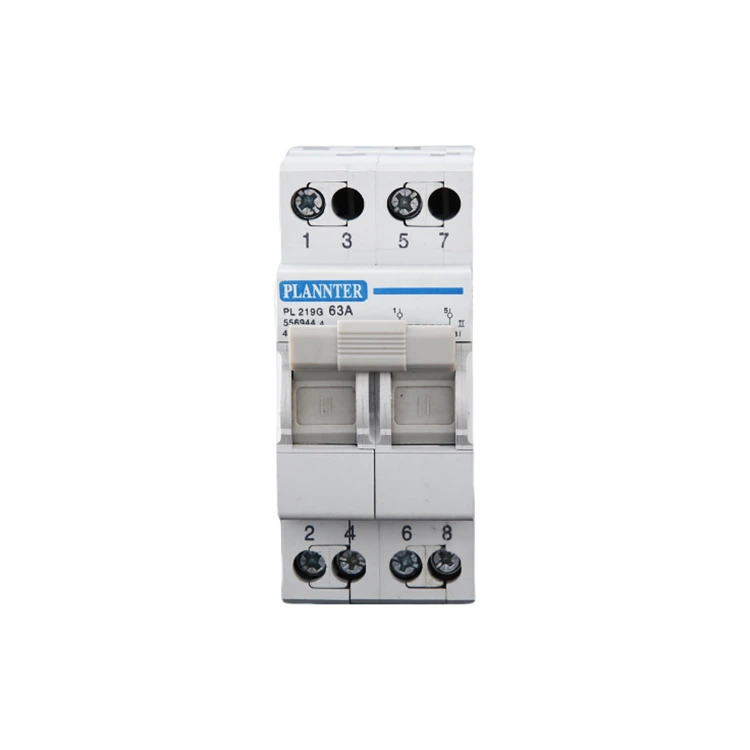
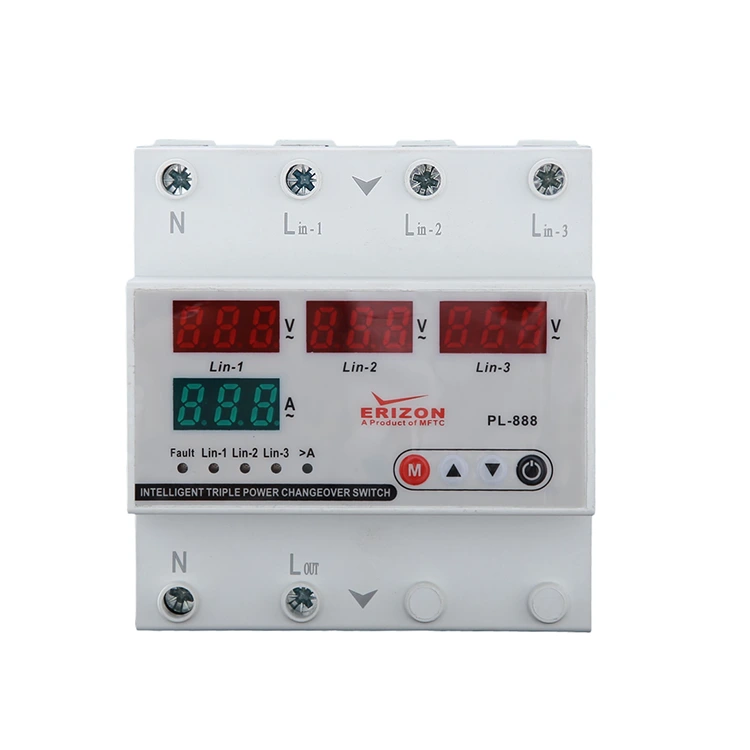
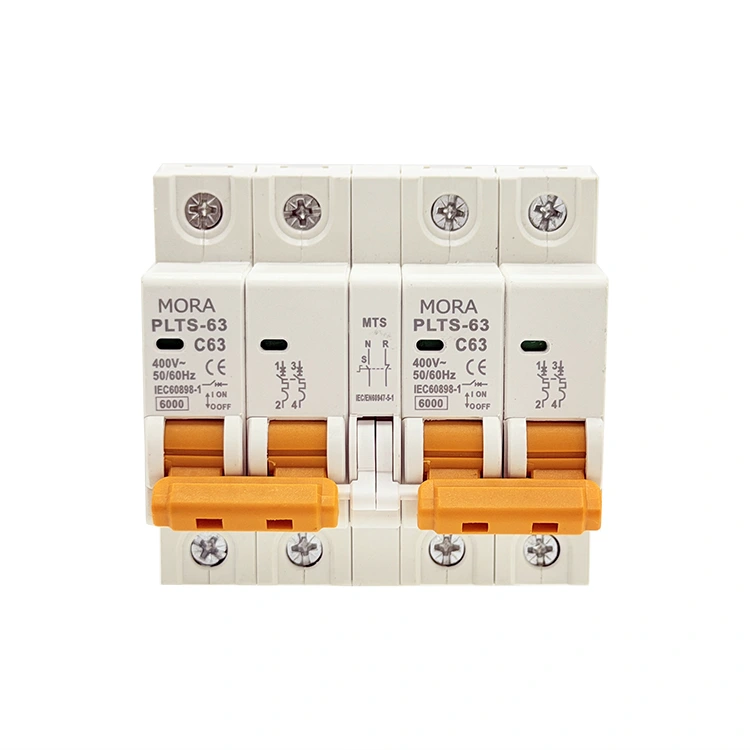
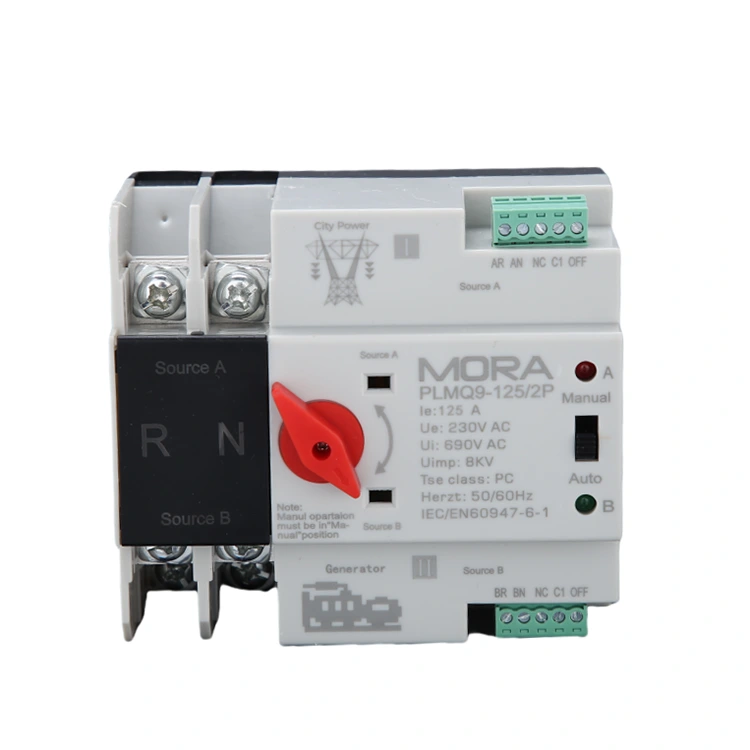
A Manual Changeover Switch (MCS) is a mechanical or electromechanical device which allows the user to manually switch a load from one power source to another (for example, from utility mains to a backup generator) and back.
Key functions:
Provides safe isolation between two power sources so that only one source supplies the load at any time.
Enables manual operation rather than automatic. The switch operator physically moves the lever or handle to select between sources.
Supports multiple transition types (open, fast, closed) as per product design.
Why is it important?
In installations where automatic switching is not required or cost-prohibitive, a manual changeover switch offers a reliable and simple solution for alternate power source management. It ensures that when the main supply fails, the user can safely and manually transfer to a backup supply without the risk of islanding or back-feeding the grid.
In normal operation, the MCS connects the load to the primary power source (utility mains).
When the primary source fails or needs maintenance, an operator manually moves the handle/lever to disconnect the primary source and connect the backup source (e.g., generator, alternative mains).
After the primary source is restored and stabilized, the operator manually reverses the switch to restore the load back to primary, and isolates the backup source.
Because the device is manual, human intervention ensures awareness of switching, and it is inherently simpler in control logic than automatic transfer switches.
Cost-effectiveness: Manual devices are typically less expensive than fully automatic transfer switches (ATS) since no automatic sensing or motorised actuation is required.
Control and safety: Manual switching gives the operator full control over when and how the changeover occurs, which can be desirable in simpler installations or where manual oversight is preferred.
Reliability and maintenance: Fewer automatic components means fewer potential failure modes; simpler design often equates to lower maintenance.
Applicability: Suitable for many settings including small commercial buildings, residential standby applications, remote installations, or non‐critical loads where full automation is not required.
Compliance and isolation: Ensures proper isolation between sources for safety, preventing backfeed into the utility grid and meeting code requirements.
When you have a generator and need a safe way to switch between utility and generator manually.
In building distribution systems where backup power is used only when necessary and manual intervention is acceptable.
In environments where automatic switching is unnecessary due to cost, operational simplicity, or regulatory constraints.
In remote or industrial sites where the operator is always present and manual switching is feasible.
Here are typical parameters for a manual changeover switch, followed by a comparison table of key model parameters. These tables are helpful to engineers, procurement specialists, and technical buyers.
Current rating (e.g., 16 A to 3200 A)
Voltage rating (e.g., 230 V, 400 V AC, or higher)
Poles (e.g., 3-pole, 4-pole)
Transition type (open, fast, closed)
Enclosure degree (IP rating)
Terminal configuration, number of connections
Suitable for heavy-duty applications, CTI rating (e.g., over 600 V)
Standards compliance (e.g., IEC/EN 60947-3)
Installation type (wall-mounted, panel-mounted)
Ambient conditions tolerance (temperature, humidity, etc.)
Manual handle/drive mechanism, optional accessories (shaft, handle length)
| Model Reference | Current Rating | Voltage Rating | Poles | Transition Type | Key Features |
|---|---|---|---|---|---|
| MCS-100A-3P | 100 A | 230/400 V AC | 3 poles | Open | Compact design, standard duty |
| MCS-3200A-4P | 3200 A | up to 1000 V AC | 4 poles | Fast/Closed option | Heavy-duty, CTI >600 V, modular |
| MCS-200A-Enclosed 2-Pos | 200 A | 230/400 V AC | 4 poles (2 position + OFF) | Open | Steel enclosure, IP rated, test link |
Ensure the current rating covers the maximum load plus safety margin.
Confirm voltage rating matches supply system (single-phase or three-phase).
Select the right pole configuration depending on whether neutral switching is required.
Choose the transition type appropriate to system tolerance for interruption (open transition is typical).
Ensure the enclosure and IP rating match the installation environment (outdoor, indoor, dusty, humid).
Confirm accessories and handle/shaft lengths are compliant with factory recommendation (e.g., handle length limit)
Q1: What exactly is a manual changeover switch?
A1: A manual changeover switch is a device that allows an operator to manually transfer a load from one power source to another, typically via a handle or lever, ensuring only one source supplies the load at any time.
Q2: Why choose a manual changeover switch instead of an automatic one?
A2: Manual switches are simpler, less expensive, and give direct control to the operator. They are suited for applications where automatic transfer is not essential or cost-effective.
Q3: How do I select the correct current rating for a manual changeover switch?
A3: Choose a current rating that covers the maximum expected load plus a margin for safety, considering future expansion and peak loads. Consult manufacturer curves and guidelines.
Q4: What is meant by transition type "open", "fast", or "closed"?
A4: These terms refer to how the switch moves from one source to the other. "Open" means break-before-make (there's a momentary disconnection). "Closed" or "fast" means make-before-break or minimal interruption.
Q5: Can I add a fourth pole later if I initially selected a 3-pole switch?
A5: No. The switch must be ordered as the correct pole version (3 or 4 poles) because modification afterwards is not allowed.
Q6: How do I wire a manual changeover switch for a three-phase system?
A6: Connect the primary source into the upper terminals, the backup source into another set, and the load into the lower. Ensure neutral and earth connections are correct. Follow manufacturer's wiring diagram.
Q7: What installation environment requirements should I check?
A7: Check enclosure protection (IP rating), ambient temperature tolerance, humidity, dust exposure, and mechanical mounting (panel or wall). Ensure the handle/shaft length is within manufacturer specs.
Q8: Is manual switching safe from a regulatory standpoint?
A8: Yes, when properly installed and labelled, a manual changeover switch provides safe isolation between sources, preventing back-feeding and ensuring compliance with safety standards.
Q9: How frequently does the manual changeover switch need maintenance?
A9: Maintenance intervals depend on usage, environment and load profile. Typically, periodic inspection of contacts, tightening of terminals, and verification of mechanical operation. Factory recommendations should be followed.
Q10: What happens if the manual changeover switch is in the wrong position or is switched improperly?
A10: If switched incorrectly, there is a risk of both sources being connected simultaneously (back-feeding) or the load staying without power. Proper labelling, lockable handles, and trained personnel help prevent misuse.
In summary, a Manual Changeover Switch is a robust and cost-effective solution for switching loads between two power sources where manual intervention is acceptable. It offers design simplicity, operator control, and compliance with safety standards. When selecting and installing one, it is crucial to review the current rating, voltage rating, pole configuration, transition type, environmental suitability and installation method.
For reliable supply, trusted manufacturing and full technical support, consider the offerings from Yueqing Planter Electric Factory. Our team can help you determine the correct model and tailor the switching solution to your application. Contact us today to discuss your requirements and request a quote.