Products
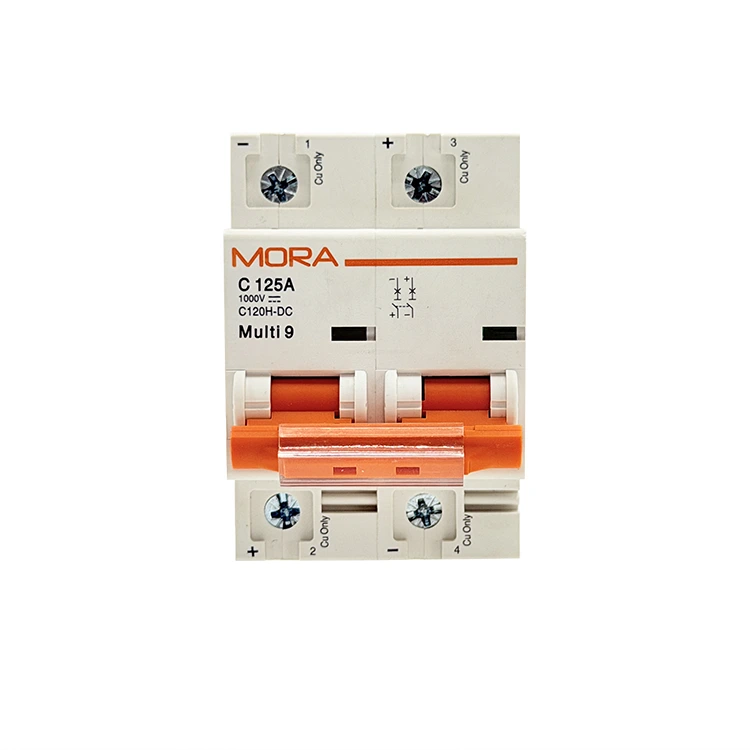
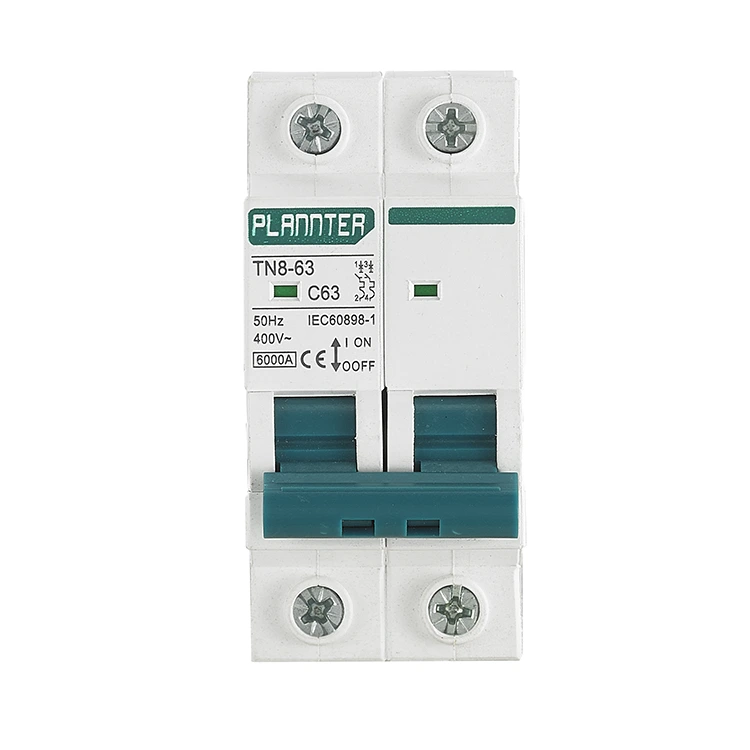
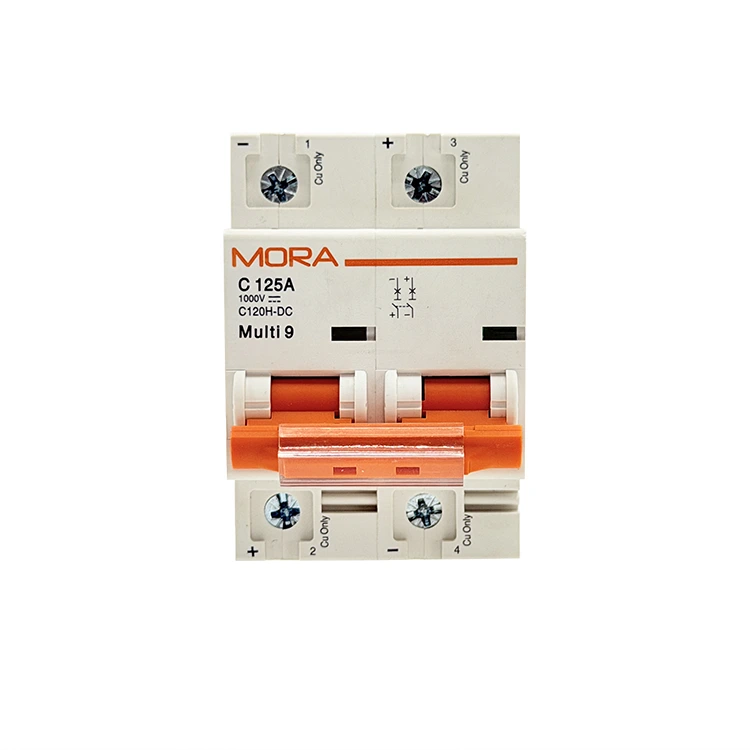
C65 3 Pole DC Circuit Breaker
  • C65 3 Pole DC Circuit BreakerC65 3 Pole DC Circuit Breaker
  • C65 3 Pole DC Circuit BreakerC65 3 Pole DC Circuit Breaker
  • C65 3 Pole DC Circuit BreakerC65 3 Pole DC Circuit Breaker
  • C65 3 Pole DC Circuit BreakerC65 3 Pole DC Circuit Breaker

C65 3 Pole DC Circuit Breaker

PUGAO is a reliable factory and has own brand, Mora. We provide system integrators with a direct business pipeline to buy C65 3 Pole DC Circuit Breaker units designed for advanced multi-string isolation, offering heavy-duty short-circuit and overcurrent protection for unified solar combiner networks and high-voltage industrial DC setups running up to 750V.

Operating as an established C65 3 Pole DC Circuit Breaker factory in China, PUGAO (Mora) builds rugged 3-pole electrical switches optimized to interrupt multiple high-voltage DC paths simultaneously; this 3P breaker leverages automated component calibration and triple permanent magnet arc-extinguishing chambers to handle specialized off-grid and industrial utility storage demands.


C65 3 Pole DC Circuit BreakerC65 3 Pole DC Circuit Breaker


Where Do Engineers Actually Deploy a 3P DC Switch?

Standard lower-voltage solar installations typically cap out at 250V or 500V DC, allowing simple single or double-pole wiring loops. However, as large-scale industrial commercial solar arrays, off-grid farm systems, and large central telecom facilities scale up, system engineers face distinct design choices that require a 3-pole configuration like the C65 3 Pole DC Circuit Breaker.

750V DC High-Voltage Series Interconnection

To maximize output efficiency and limit system line transmission losses over long distances, engineers frequently choose to run solar panel strings in a long series sequence. This stacking drives open-circuit voltages up to 750V DC. Since standard individual breaker chambers are rated for 250V apiece, a 3P unit allows engineers to loop the positive conductor through two poles in a series wiring pattern while routing the negative conductor through the third pole. This splits the electrical stress evenly across all three micro-environments.

Three-Wire Floating DC Networks

Certain heavy-duty industrial processing setups and mining haulage equipment utilize a specialized center-tapped or three-wire ungrounded DC distribution topology (comprising Positive, Negative, and Neutral/Ground reference wires). A 3-pole protective switch isolates all three distinct current-carrying conductors simultaneously during a fault, cutting off the potential for erratic stray return currents.

Dual-Source Battery Storage Backup Isolation

In localized telecom switching nodes, a single 3-pole hardware chassis can be configured to manage a split-bus arrangement—such as switching two separate positive incoming battery bank lines alongside a single shared common return line. This reduces panel space requirements inside space-constrained equipment racks.


Performance Capabilities

The operating thresholds and engineering materials defined below are strictly maintained across our automated quality verification benches:

Operational Metric

Standard Parameter Value

Application Context

Max Rated Voltage

750V DC up to 1000V DC (Series Loop)

Required for advanced commercial solar strings.

Current Rating Breadth

6A, 10A, 16A, 20A, 25A, 32A, 40A, 50A, 63A

Provides flexible overcurrent matching options.

Ultimate Breaking Capacity

6,000 Amperes (6kA)

Maximum interruptible short-circuit current loop.

Base Chassis Mold

PA66 Nylon (V0 Fire-Rated)

Zero flame propagation; structurally stable to 960°C.

Moving & Fixed Contacts

Silver-Graphite Composition

Formulated to resist terminal welding under load.

Terminal Connection Ports

Thickened Tunnel-Clamp Copper

Handles high-torque settings up to 2.5 Nm.

Internal Calibration Form

High-Sensitivity Bimetallic Strip

Manages delayed thermal overload trips.


What Technologies Prevent Internal Contact Fusion at 750V?

1. Triple Permanent Magnet Blown-Arc Systems

High-voltage direct current arcs do not cross a natural zero-current state, meaning they can sustain a high-temperature plasma channel between opening contacts that easily melts standard copper components. To solve this, our C65 3 Pole DC Circuit Breaker incorporates independent permanent magnets inside each of its three individual poles. These magnets create a strong local magnetic field that repels the arc, physically blowing it away from the contact pads and driving it deep into a 9-plate steel cooling grid. This action splits and quenches the arc within 5 milliseconds.

2. Synchronous Mechanical Latch Linkage

If one pole delays opening during a high-voltage fault, the remaining pole takes the brunt of the electrical stress, causing terminal burnout. PUGAO (Mora) builds these breakers with a rigid internal mechanical link bar connecting all three pole sub-mechanisms. If a short-circuit fault triggers the magnetic trip coil in any single pole, the common-trip link bar forces all three poles to drop simultaneously, preventing dangerous single-line energized conditions.

3. Precision Factory Spot-Welding Control

Variations in terminal resistance inside multi-pole breakers lead to uneven current distribution and localized hot spots inside distribution boxes. Our 5,000-square-meter manufacturing facility avoids this issue by employing an automated micro-breaker production line. Automated punching and spot-welding machines lock the internal shunts and copper contact assemblies into precise positions, providing identical internal resistance levels across all three poles.


C65 3 Pole DC Circuit BreakerC65 3 Pole DC Circuit Breaker


Troubleshooting Guide for Complex Field Issues

• The C65 3 Pole DC Circuit Breaker toggle handle automatically resets to the center position during initial system startup

Why this happens: The internal mechanical latch drops when a downstream short circuit is present, or the positive series loop jumper wire has been miswired to a negative contact terminal, creating a dead short across the poles.

How to fix it: Isolate the main power loop completely. Check your loop jumper configuration against the series schematic. Use an insulation resistance tester on downstream lines to find shorted wires or insulation breaks before trying to flip the switch back on.

• One pole port shows a high temperature rise compared to adjacent terminal ports

Why this happens: The terminal screw for that specific port was under-torqued during field setup, or the wire strands within the tunnel clamp are unevenly compressed.

How to fix it: Shut down power transmission. Remove the conductor from the hot port, inspect the copper strands for arcing damage or oxidation, trim and re-strip the cable if needed, re-insert it, and use a calibrated torque wrench to tighten the screw to 2.5 Nm.


Engineering & Application FAQ

Why can a 3P DC breaker handle higher voltages when wired in a series loop configuration?

Each independent pole chamber of a miniature circuit breaker is engineered to safely quench up to 250V DC under fault conditions. By cascading the positive current path through two individual poles in series before it exits to the inverter, the total voltage stress across the contacts during an arc event is split down from 500V to 250V per chamber, allowing the system to easily handle higher overall voltages.

What are the operational consequences of skipping the positive loop jumper and wiring three separate individual solar strings through the three individual poles?

If you run three independent strings through a single breaker chassis without tying them together in series, the maximum voltage rating for each string must remain below 250V DC. If any individual string exceeds this threshold and experiences a fault, its single-pole chamber will lack the voltage-splitting capability needed to quench the resulting high-voltage arc, leading to internal housing destruction.

How does continuous exposure to high solar radiation affect the internal bimetallic strip calibration inside a sealed combiner enclosure?

Our bimetallic strips are calibrated at a controlled factory baseline of 30°C. When enclosed in an unventilated outdoor combiner box where solar heat drives internal ambient conditions up to 55°C, the bimetallic strips inside the C65 3 Pole DC Circuit Breaker expand prematurely. This lowers the actual thermal overload trip point to around 83% to 85% of its nominal rated current. To counter this, engineers should either integrate passive cooling louvers or size up the breaker rating during the initial system design phase.

Hot Tags: C65 3 Pole DC Circuit Breaker
Send Inquiry
Contact Info
For inquiries about mini circuit breaker, voltage protector, changeover switch or price list, please leave your email to us and we will be in touch within 24 hours.
X
We use cookies to offer you a better browsing experience, analyze site traffic and personalize content. By using this site, you agree to our use of cookies.Privacy Policy
RejectAccept